

INSIDE SCOOP
How DJI Drones Are Protecting and Serving Elephants in Kenya
Feb
Poachers slaughter between 20,000 and 40,000 elephants every year; that is one elephant killed every 15 minutes. For the last decade, elephant mortalities due to poaching are now exceeding the rate at which they are able to reproduce. Despite the international ban on ivory trade, its demand remains high, especially in Asia, where it is used in traditional medicine or is seen as a symbol of prestige and wealth. Black market ivory trafficking is hugely profitable and the growing sophistication of illegal wildlife trade has led to the population of elephants in Kenya to drop drastically. Here’s how DJI Drones are protecting and serving elephants in Kenya
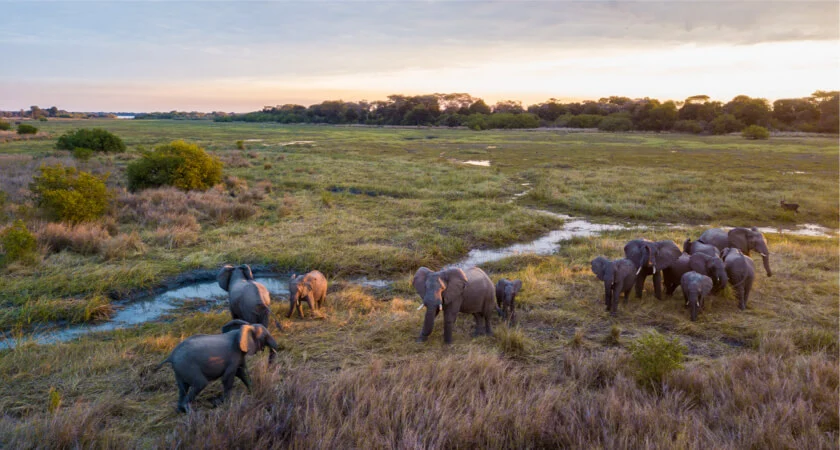
In addition to poaching, Human-Elephant Conflict (HEC) is also a major threat to both elephants and humans. As the forest wildlands in which elephants live have steadily shrunk, and as human populations have grown, conflict is increasingly common as humans and elephants clash over space; a battle the elephant is losing.
Poaching: devastating damage to elephant populations
Inadequate anti-poaching capability, ineffectual law enforcement, and corruption often undermine the struggle against poaching.
With male tusks around seven times the weight of those of females, bull elephants are the poachers’ main targets. Despite this, female African elephants are also killed. This has led to the instability of elephant societies in Kenya, leaving a growing number of orphaned baby elephants. African elephants are more prone to poaching than Asian elephants as only some Asian males have tusks.
Non-poacher killings of elephants for meat alone are rare but elephant hide is highly valued with clothing and furnishings made of elephant leather sold in boutiques across Asia and the US.
Combating elephant poaching in Kenya with DJI drones
In recent years, anti-poaching drones have been a useful and innovative addition to the various methods of contesting illegal hunting. One organization that is utilizing conservation drones to reduce both poaching and HEC is the Mara Elephant Project that focuses on elephant protection in the Maasai Mara, Kenya.
Poachers prefer to hunt in the late afternoon so they can use the last of the light to make their kills and escape under the cover of darkness.
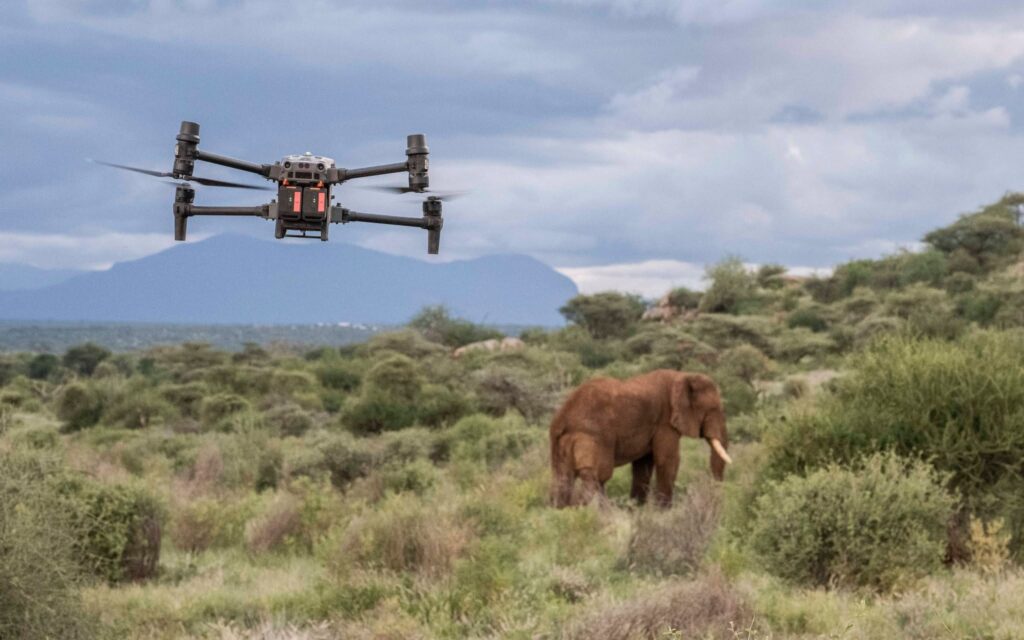
The anti-poaching drones, like the Mavic 3 Enterprise Series, Mavic 2 Enterprise Dual or the Mavic 2 Enterprise Zoom used by the Mara Elephant Project, with their cameras capable of 30x zoom or thermal imaging, now make it easier to locate the poachers during the day and at night. These onboard cameras relay live video to ground-based teams, often safely miles away, and can record footage for later analysis. The conservation teams can then share their monitoring with rangers and police.
How DJI drones help minimize human-elephant conflicts in Kenya
Drones are not only aiding in anti-poaching efforts, but are also being deployed to help prevent human-elephant conflict.
With the human population of the Maasia Mara growing by 10% every year, their encroachment into the local elephants’ habitat is inevitable. This has led to loss of property and crops as the elephants react to the incursion and even loss of life for both people and elephants. The Mara Elephant Project uses drones, as just one of the tools in their initiative, to help herd elephants away from danger.
The drones are used in a similar way to how dogs herd sheep. The noise made by the drone sounds like a swarm of bees to the elephants and will make them alter course. This enables members of the project’s team to steer the elephants clear of nearby villages or poaching ‘hot zones’. The data is also collated and the subsequent wildlife mapping can be continuously updated.
As an interesting result, elephants in Kenya have demonstrated an ability to adapt to and ignore surveillance DJI drones, a discovery researchers say could revolutionise wildlife monitoring and unlock new secrets about herd behaviour.
A study published in 2025 in Scientific Reports by conservation group Save the Elephants (STE) and the University of Oxford found that while drones were once viewed primarily as a tool to scare elephants away from crops, the animals can quickly habituate to the devices if flown correctly. Which is why DJI Kenya advocates for safe flying practices at all times by pilots.